
Journal LinkedIn & Innovation – My visit to LinkedIn’s Corporate HQ – Part II
LinkedIn & Innovation – My visit to LinkedIn’s Corporate HQ – Part II
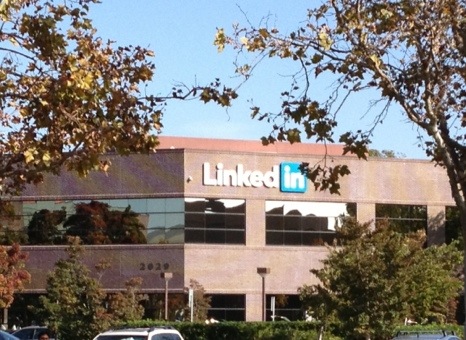
16 October 2012This is the continuation of my last Sunday's post on the same topic, based on the opportunity I have recently had to pay a visit to the LinkedIn's Headquarter in Mountain View, CA.
Particularly, today I'll be reporting my findings on what Jon Traupman of LinkedIn had related to us regarding the lessons he and his company have learned on innovation:
1) How to keep innovating--Jon's recipe is - just apparently - simple: "state a very ambitious mission", and execute against it. Based on his observation, even very successful companies see a decrease in their ability to innovate over time, primarily due to their narrowing mission in life. Companies which are getting closer to their ultimate goal, are loosing steam and are getting narrow minded. On the opposite, as an example, LinkedIn's mission to "create economic opportunity for every professional in the world" is giving them plenty of room before having fulfilled it. Key questions he would raise: How close are you to realize your company vision? Do you need to restate it so that it's broader?
2) Culture of innovation--"Innovation comes from people, not from processes". How do LinkedIn do it, and how can they sustain it? First of all, by hiring for it like a startup, with a strong preference for creative generalists. In fact, as opposed to too highly specialized people, the generalists have better chances to drive innovation, as one should try to solve unknown problems.
Another key element for nurturing innovation is "making time for it": you must find
ways to set aside time for innovation. E.g., the recent LinkedIn Inmaps application is the
result of the brain-storming sessions that the company is dedicating to innovation.
It's of course then fundamentally important to "reward these innovation efforts", and
make them visible to the rest of the employees.
Last but not least, one needs to "cross-pollinate by moving people around", in order to
share innovative talents while stimulating new ways of looking at the traditional
problems.
3) Friction--"Innovations happens at the crossroads". LinkedIn is another successful company where the innovation culture translates onto not being afraid of disagreements or of introducing new products/changes which may destroy already existing product lines.
4) What’s new at LinkedIn?--they will keep their network of professionals as priority one: anything which could improve it in terms of personal engagement will be considered as an interesting potential addition to the current functionalities.
LinkedIn’s principles of operations have remained basically the same since it was
founded in 2002, as their 3 basic understandings are still valid today:
- you should grow viral;
- all user-generated content;
- if the businesses will be receiving value, they will pay for it.
And also their three steps for expansion are still valid, always in this order: a) growth;
b) usage; c) revenue.
The Silicon Valley is surely the ideal environment for innovation, and it was instrumental to the creation of LinkedIn: the fast pace of technology innovation is determining a virtuous circle from which they also got inspired. To the LinkedIn founders and employees merit, we must admit that they were able to scale up, by identifying and sticking to their foundational principles and competitive advantages. As an example, one of their principles and a competitive advantage, is not to limit the set of people who may be interested in joining the LinkedIn's community, as they may become instrumental to the creation of the network itself.
LinkedIn is another great example of the US technology innovation, and it’s easy to predict that similar European companies will be struggling to compete with them.


Leave a comment
Profile


After many years in the ICT business, I thought I'd seen 'em all. But I'm still learning... I'm trying to collect some ideas for a brand new digital agenda.
No comments